Alberta · Protected / no bathing
Cave and Basin
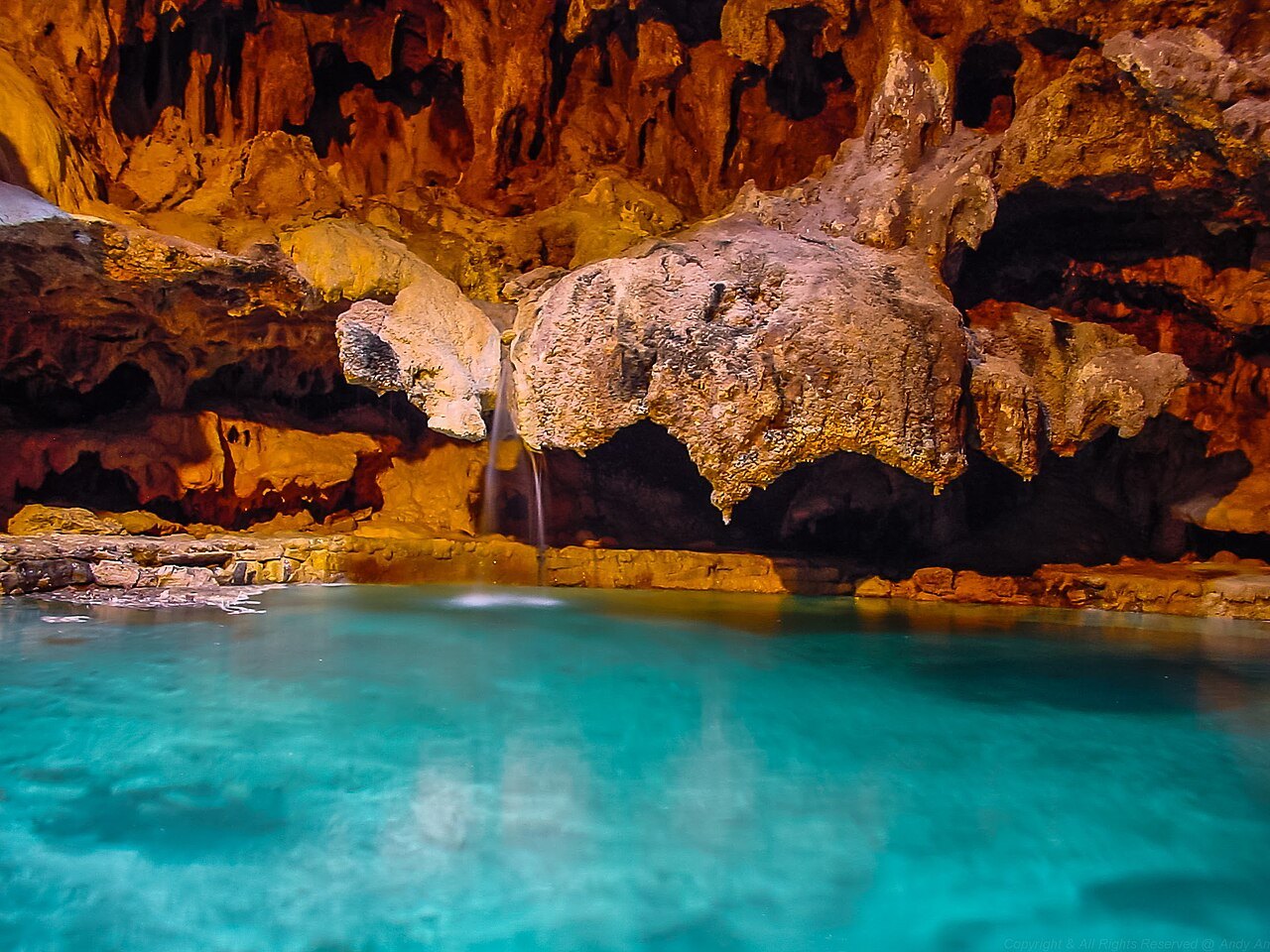
Cave and Basin preserves the thermal landscape closely associated with the beginning of Canada’s national park system. The cave, pools and interpretive setting make this a place to understand the springs, their ecology and their long cultural history.
Historical source coordinate; not a trailhead. Accuracy and datum have not been independently verified. Historical water readings describe source samples, not safe soaking temperatures.
Why you cannot get in the water
Cave and Basin is where Canada's national park system began, and it is also the one thermal site in Banff you are specifically not allowed to bathe in. The basin is a large outdoor pool that was used for public bathing historically; swimming is no longer permitted, and every thermal pool in the area except the Banff Upper Hot Springs has been closed to people.
The reason is a snail. Visiting is about the cave, the history and the boardwalks, not a soak — plan it as a historic site rather than a hot spring.
The Banff Springs snail
Physella johnsoni, the Banff Springs snail, lives nowhere else on earth. It is confined to a handful of thermal springs near Banff, with its largest population at Cave and Basin, and the total world population numbers only a few thousand animals.
It is listed as endangered on Schedule 1 of the federal Species at Risk Act. The snails cling to floating mats of algae and bacteria, woody debris and leaves on the water surface — exactly the material a bather would destroy by stepping in. Closing the pools is habitat protection, not bureaucratic caution.
1883, and the argument that made a park
Three Canadian Pacific Railway workers came upon the springs in 1883. The competing claims that followed pushed Ottawa to reserve the land, and Banff National Park was established in 1885 as Canada's first — the beginning of the national park system.
First Nations people had used these springs for thousands of years before that, something the site's own interpretation now addresses directly.
Opening hours & season
May 15–October 15: daily 9:30 am–5 pm. October 16–May 14: Thu–Mon 11 am–5 pm.
Interpretive site only; no bathing. Scheduled closures include October 22–24 and December 14–17, 2026, December 25, March 15–18 and June 21–24, 2027. Consult Parks Canada for the complete schedule.
All times are local to the spring. Checked 2026-10-01; this is not a live opening-status display. Closure notices override regular hours.
Our take
An excellent complement to a bathing visit elsewhere in Banff. Its value is in geology, history and conservation; approach it as an interpretive stop, not a soak.
Editorial assessment based on published information. No firsthand visit or customer score is implied.
Before you go
Sources & record notes
Geoscience BC’s 2016 compilation · 8 historical sampling records · Source name: Cave and Basin. References recorded in the dataset: Souther 1973; Mazor 1983; Grasby 2000.
Source notes: Cave; Basin; Table 1 - Cave, Elworthy 1918; Table 1 – Cave, van Everdingen 1972; Table 1 – 1994; Table 2 - Cave; Table 2 - Basin
Sources used for this guide
- Wikipedia — Banff Springs snail (Physella johnsoni)
- Species at Risk Public Registry — critical habitat of the Banff Springs Snail
- Wikipedia — Cave and Basin National Historic Site
- National Parks Traveler — the endangered Banff Springs snail
Written from the published sources above. Operator hours, access rules and closures change; the official link is authoritative.